

How can I reset my sleep after stress or burnout?
Stress can disrupt sleep by affecting the biological and psychological processes that help you sleep, including circadian timing, alertness and the associations you develop around bedtime. Resetting your sleep usually involves looking at your whole 24-hour pattern — including light exposure, sleep and waking times, movement, food and drink, stress and evening habits — as well as addressing any worry or persistent alertness that may be keeping you awake.
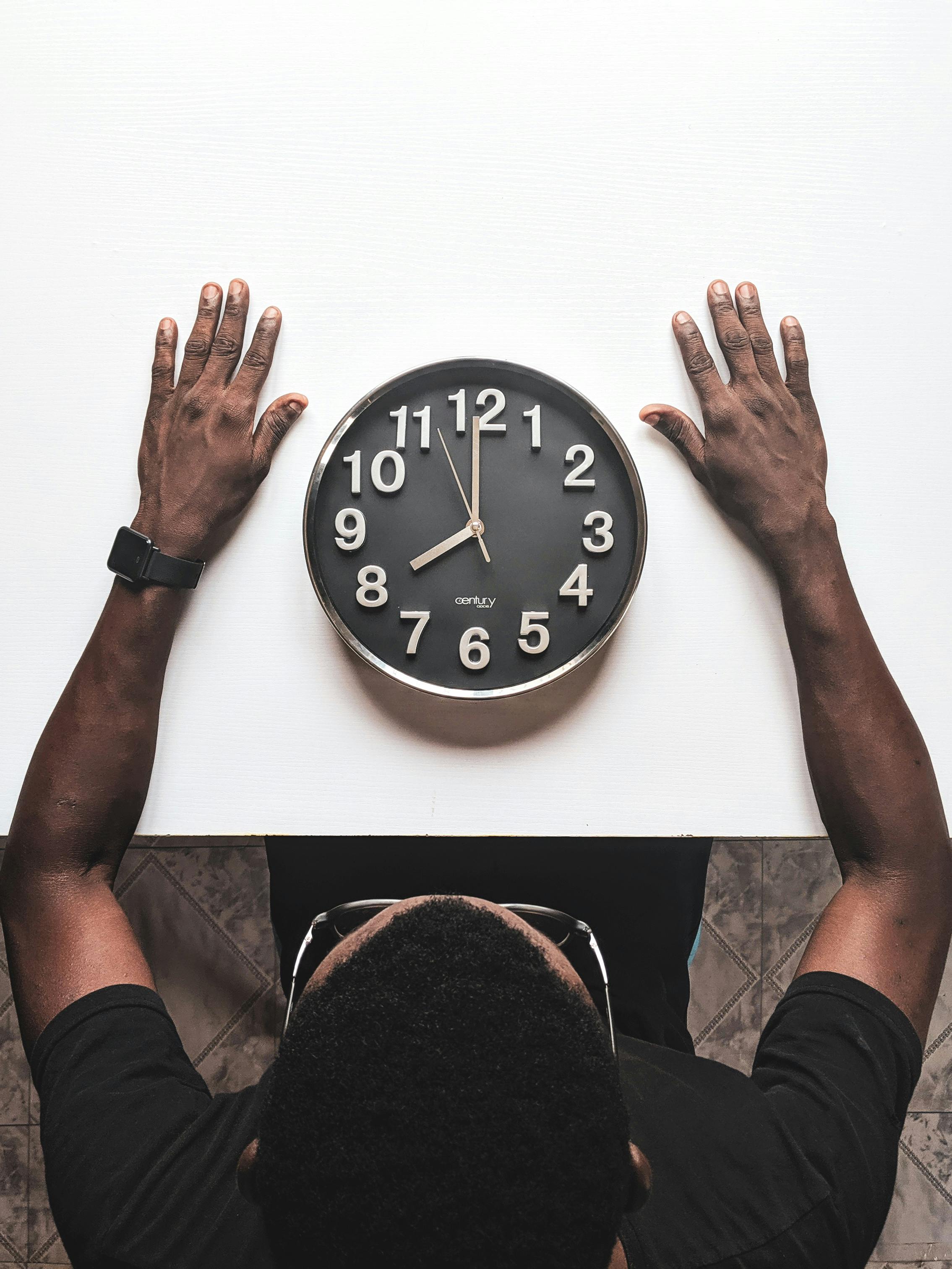
Stress can change sleep surprisingly quickly. You might have slept well for years and then find that, during or after a difficult period, you struggle to fall asleep, wake repeatedly during the night, wake much earlier than you want to, or feel exhausted during the day and strangely alert when bedtime arrives.
When this happens, you might focus entirely on sleep. You might search for the right bedtime routine, try supplements, track every night’s sleep or put increasing amounts of effort into making yourself switch off.
I take a broader view.
Sleep forms part of a 24-hour biological rhythm. When I work therapeutically with someone experiencing sleep problems after stress or burnout, I want to understand what happens across their whole day. I look at their sleep and waking times, exposure to daylight and darkness, movement, food and drink, stress, relationships, evening habits and the demands they currently face.
I also want to understand what happened when their sleep changed.
Sometimes an obvious stressful event triggers the problem, lives under pressure for so long that poor sleep gradually becomes normal or sometimes the original problem passes, but worry about sleep and attempts to control it continue to interfere with sleep.
Understanding your individual pattern gives us somewhere useful to begin.
Book your initial consultation
Why does stress disrupt my sleep?
The systems that control stress and sleep interact closely.
When something requires your attention, your body has mechanisms that help you remain alert and respond. Stress can therefore affect how easily you fall asleep, how deeply you sleep, and how readily you wake. Worry and rumination can add another layer, particularly when the quiet of bedtime gives your mind space to return to whatever occupied it during the day.
Researchers use the term sleep reactivity to describe the extent to which someone’s sleep changes in response to stress. People vary considerably in this. One person can experience a stressful week and continue sleeping relatively normally, while another person’s sleep changes dramatically.
This variation matters when I work with sleep problems. I do not assume that everybody who struggles to sleep after stress needs the same solution.
Why can I still struggle to sleep after the stress has ended?
Sleep does not always return immediately when your circumstances improve.
Imagine spending several months dealing with something that requires you to work late, think constantly, check your phone frequently or remain available to other people. You might experience more artificial light in the evening, move less during the day, eat at different times, and lose the transitions that previously separated activity from rest.
Over time, your sleep timing and habits can change.
Your brain can also learn associations around sleep. If you repeatedly lie awake thinking, worrying or monitoring whether you will sleep, you can gradually start to associate your bed and bedtime with wakefulness and effort.
You might then experience the frustrating combination of feeling exhausted throughout the day and increasingly alert as bedtime approaches.
When I work therapeutically with this, I want to understand what influences the biology of your sleep and what your brain has come to expect around bedtime.
Book your initial consultation

How can burnout affect sleep?
People experiencing burnout commonly report sleep problems, including insomnia symptoms and poor sleep quality.
I approach claims about burnout and hormones carefully. You will sometimes read that burnout means your cortisol is too high, too low, or rising at the wrong time. Human stress physiology varies considerably, and symptoms alone cannot tell us what an individual’s cortisol or melatonin levels look like.
Instead, I explore what prolonged pressure has changed in someone’s life.
Someone approaching burnout may spend months getting up early despite inadequate sleep, working into the evening, eating irregularly, spending less time outdoors or relying more heavily on caffeine or alcohol. They may have less time for movement and connection, while work and worry increasingly follow them into bed.
All of these changes can affect sleep.
This forms an important part of my approach, because I consider sleep within the wider conditions of someone’s life.
Why am I tired all day but awake at night?
Several things can contribute to feeling exhausted during the day and more awake in the evening.
Two important biological processes involved in sleep are circadian timing and sleep pressure.
Your circadian system helps organise sleep and wakefulness across approximately 24 hours. Light plays an important role in this process, because the light reaching your eyes gives your brain information about the time of day and helps synchronise your internal clock with the external world.
Sleep pressure works differently. Pressure for sleep generally builds while you remain awake, and reduces while you sleep.
These processes interact with your behaviour, stress levels, physical and mental health, medication, caffeine, alcohol and environment.
After a poor night’s sleep, you might spend longer in bed, get up later, or sleep during the day. These choices make sense when you feel exhausted, but they can also change the sleep pressure you carry into the following night and alter the timing cues your body receives.
For this reason, I want to understand someone’s whole sleep-wake pattern, rather than focusing only on what happens after they get into bed.
Book your initial consultation
How can I reset my sleep schedule after stress?
Rather than searching for one thing that will reset your sleep, it can help to look at the information your body receives throughout the day.
Your body uses environmental and behavioural cues to help organise its rhythms. When those cues become irregular during periods of stress, bringing more consistency back into the day can support sleep.
Get morning and daytime light
Light provides one of the strongest environmental signals to your circadian system.
Getting outside during the morning and experiencing natural changes in light throughout the day gives your brain useful information about time. The timing of light matters too, because light exposure at different points in the day can influence circadian timing differently.
This is why I ask clients about their mornings as well as their evenings.
Someone who gets out of bed, travels to work in the dark, and spends most of the day indoors may receive very different light cues from someone who regularly gets outside during daylight hours.
Create a clearer transition into evening
For most of human history, the environment provided an obvious transition between daylight and darkness. Modern life gives us much more control over light.
Bright household lighting, phones, televisions and laptops can extend our exposure to light into the evening.
If you want to establish a more consistent sleep rhythm, creating a clearer transition from bright daytime conditions towards a dimmer evening may help.
Keep your waking time reasonably consistent
The time you get up helps provide structure to your sleep-wake cycle.
After a period of poor sleep, you may understandably chase sleep whenever it becomes available. This can lead to increasingly variable waking times, daytime naps, and longer periods in bed.
For some people, these changes make the sleep pattern harder to understand and can reduce sleep pressure for the following night.
A more consistent waking rhythm can give your circadian system clearer timing information. I always consider the individual when exploring this, particularly when someone feels extremely depleted or has other health considerations.
Look at how much you move during the day
Movement forms part of the biological context in which humans sleep.
When I ask about movement, I want to know more than whether someone exercises. I look at how much of the day they spend sitting, whether they get outside, what kind of physical activity they enjoy, and whether movement disappeared from their life during a stressful period.
I also consider what happens physically when someone experiences stress.
Human stress responses prepare the body for action. Modern stress often occurs while we remain physically still: reading an upsetting email, worrying about money, sitting in traffic or thinking through a problem at a desk.
Movement changes our physiological state and forms one part of the wider sleep picture I explore with clients.
Book your initial consultation

Look at food, caffeine and alcohol
Sleep also interacts with our metabolic rhythms.
The timing and composition of meals, caffeine consumption, and alcohol can all influence someone’s experience of sleep.
Caffeine deserves particular attention because its effects can continue for many hours, and people vary considerably in their sensitivity to it.
Alcohol can make some people feel sleepy initially, while disrupting their sleep later in the night.
Rather than giving someone a generic list of foods to eat or avoid, I want to understand their normal pattern and whether anything changed around the time their sleep became difficult.
Consider connection and what is happening around you
I also ask about other people.
Humans have always slept within a social environment. Our relationships influence our experience of stress, and supportive relationships can affect how we respond to difficult circumstances.
Someone who spends months carrying considerable responsibility alone may experience a very different daily load from someone who has reliable practical and emotional support around them.
If we focus only on what that person does during the hour before bed, we may miss an important part of the picture.
This is one reason my work with sleep extends beyond bedtime.
Why do I wake at 3am or 4am after stress?
Most people wake briefly at points during the night. Problems arise when you wake fully and struggle to return to sleep.
Many things can contribute to repeated early waking, including stress and worry, circadian timing, alcohol, temperature, environmental disturbance, medication, physical health conditions and hormonal changes associated with life stages such as menopause.
For this reason, I approach explanations that link waking at a particular time directly to cortisol with caution. The time you wake cannot tell us your cortisol level.
What happens after you wake can give us useful information, though.
You may immediately start thinking about tomorrow, replaying yesterday, checking the clock or calculating how many hours remain before your alarm. Your thoughts might trigger more alertness, which makes returning to sleep increasingly difficult.
In therapy, we can explore what happens during these waking periods alongside the wider circumstances surrounding your sleep.
Why can trying harder to sleep make sleep more difficult?
We cannot force sleep in the same way that we can deliberately stand up, walk across a room or pick something up.
After enough difficult nights, people understandably begin putting more effort into sleep. You might repeatedly check the clock, calculate how many hours you could still get, go to bed earlier, cancel plans because you need to sleep or continually monitor your body for signs of tiredness.
You may also start worrying about how you will function the following day.
Over time, bedtime can acquire considerable emotional significance. Instead of simply going to bed, you may begin assessing whether you feel tired enough, wondering whether tonight will go badly and monitoring how long you have remained awake.
I pay close attention to this pattern in therapy.
Sometimes we need to work with the stress that originally disrupted sleep. Sometimes anxiety specifically about sleep now contributes to the problem. Frequently, the two become intertwined.
Book your initial consultation
How can hypnotherapy help with sleep problems?
Hypnotherapy gives us one way to work with psychological processes that can contribute to persistent sleep difficulties.
During hypnosis, you remain aware and in control. We can use focused attention, imagery and suggestion in ways that relate specifically to what we discover during your assessment.
For one person, we might focus on the worry that appears as soon as their head reaches the pillow. Another person may have experienced a frightening or traumatic event and continue to experience increased alertness at night. Someone else may have developed strong expectations about waking at a particular time or needing to follow particular routines before they can sleep.
Where appropriate, I also teach self-hypnosis so clients have something they can use independently.
How I work with sleep difficulties
When someone comes to me because they cannot sleep, I do not begin with a standard hypnosis recording.
We start with an initial consultation and build a detailed picture of what happens for you.

I want to know when your sleep problem began and what happened in your life around that time. We explore your usual sleep and waking times, daylight exposure, evenings, movement, food and drink, caffeine and alcohol, work patterns, relationships and current stress.
I also explore whether trauma or prolonged stress could play a role. If anything suggests that a medical condition, medication or another health issue may contribute to your sleep problems, I encourage you to seek appropriate medical advice.
From there, I tailor the therapeutic work to you.
We may work directly with stress, worry or difficult experiences. We might explore what happens mentally when you wake during the night. Where useful, I can teach hypnosis, self-hypnosis, imagery, breathing techniques or progressive relaxation.
Alongside the therapeutic work, we can look at the daily conditions that support your circadian rhythm and sleep.
I want to understand your particular experience because the words “I can’t sleep” can describe many different problems.
When should I speak to my GP about sleep problems?
Speak to your GP if sleep difficulties persist or significantly affect your ability to function during the day.
A number of physical and mental health conditions can affect sleep. Sleep apnoea, restless legs, pain, medication and hormonal changes can all contribute to disturbed sleep.
You should also seek medical advice if you experience symptoms such as loud snoring with pauses in breathing, gasping or choking during sleep, or severe daytime sleepiness.
Frequently asked questions about stress, burnout and sleep
How long does it take for sleep to return to normal after stress?
Everyone responds differently. Your sleep may improve quickly when a short-lived stressful period ends, while difficulties that continue for months can develop several contributing factors.
Rather than expecting your sleep to recover within a particular number of days or weeks, I prefer to explore what currently affects it.
Can stress cause insomnia?
Yes. Stressful events can trigger difficulty falling asleep or staying asleep. People vary considerably in how strongly their sleep responds to stress, and worry or rumination can contribute to continuing sleep difficulties.
Can burnout cause insomnia?
People often experience sleep problems alongside burnout. Prolonged occupational or personal stress can also change many of the behaviours and environmental cues that influence sleep.
If you experience both exhaustion and persistent insomnia, it can help to look at the wider circumstances of your life as well as what happens during the night.
Why can’t I sleep even though I’m exhausted?
Several processes influence whether you can fall asleep. Circadian timing and sleep pressure both play important roles. Stress, worry, light exposure, caffeine, daytime sleep and your expectations around bedtime can also influence your ability to sleep.
Feeling exhausted therefore does not always mean that sleep will come easily at that particular time.
Does cortisol cause me to wake at 3am?
Cortisol follows a daily rhythm and interacts with sleep and wakefulness, but waking at 3am cannot tell us what your cortisol level is.
Many things can cause you to wake during the night. I would want to explore your individual pattern rather than infer a hormonal problem from the time on the clock.
Can hypnotherapy help insomnia?
Research into hypnosis for sleep has produced some encouraging findings, although researchers still need more high-quality studies.
Hypnotherapy may help some people, particularly when stress, worry, persistent alertness or learned patterns around sleep contribute to their difficulties.
What should I do first if stress has disrupted my sleep?
Start by looking at your whole 24-hour pattern rather than concentrating only on bedtime.
Notice when you wake, when you experience daylight, how much you move, when you eat, how much caffeine or alcohol you consume, whether you nap and what happens during the hours before bed.
Then think about when your sleep changed and what else changed in your life around the same time.
These details can help us understand what may now contribute to your sleep difficulties.
Help with sleep problems and insomnia
I have worked therapeutically with people for around twenty years, including people experiencing stress, anxiety, trauma and sleep difficulties.
My approach to sleep brings together hypnotherapy and my understanding of stress, human biology, circadian rhythm and the conditions surrounding someone’s everyday life.
When someone comes to me with a sleep problem, I want to understand why this particular person, living this particular life, started struggling to sleep at this particular time.
If you struggle to fall asleep, wake repeatedly during the night, wake too early or find that your sleep has changed following stress or burnout, you are welcome to book a one-hour consultation.
We can explore what has happened, what currently contributes to your sleep difficulties, and whether my way of working feels appropriate for you.
Book your initial consultation
 Welcome to my website, a space where I try to catch your eye, and explain the heart of my practice.
My journey over 17 years has taught me that true knowledge isn’t about the letters after my name or the timeline of my academic pursuits. It’s about the stories shared, the moments of vulnerability, and the human connection that transforms both you and me. It’s holding space, listening intently, and noticing the patterns within your words and emotions.
Together, we can navigate the complexities of life, embracing both the shadow and the light. So, if you’re seeking more than just a quick fix, and ready to make lasting changes, you’re in the right place. Let’s embark on this journey together. Click and read more about my approach here.