

Why does anxiety get worse at bedtime?
Anxiety gets worse at bedtime, because your nervous system shifts from daytime distraction into nighttime processing. When external stimulation drops, the body reveals the tension it held during the day. Your thinking brain becomes quieter, your emotional brain becomes louder, and your system enters an alert state just when you want to rest.
You may function through the day, complete tasks and hold everything together. Then the evening arrives, your body slows, your environment quietens, and anxiety rises. Your heart may race, your thoughts may spiral, and your body may feel unsettled just when you expect it to relax.
The short explanation is that anxiety rises when distractions fall.
The deeper explanation is that your nervous system uses the quiet of the night to reveal what it did not have space to express earlier. When you lie still, your system processes the day. If your system carries tension, the anxiety appears.
Why does my anxiety spike when I finally stop?
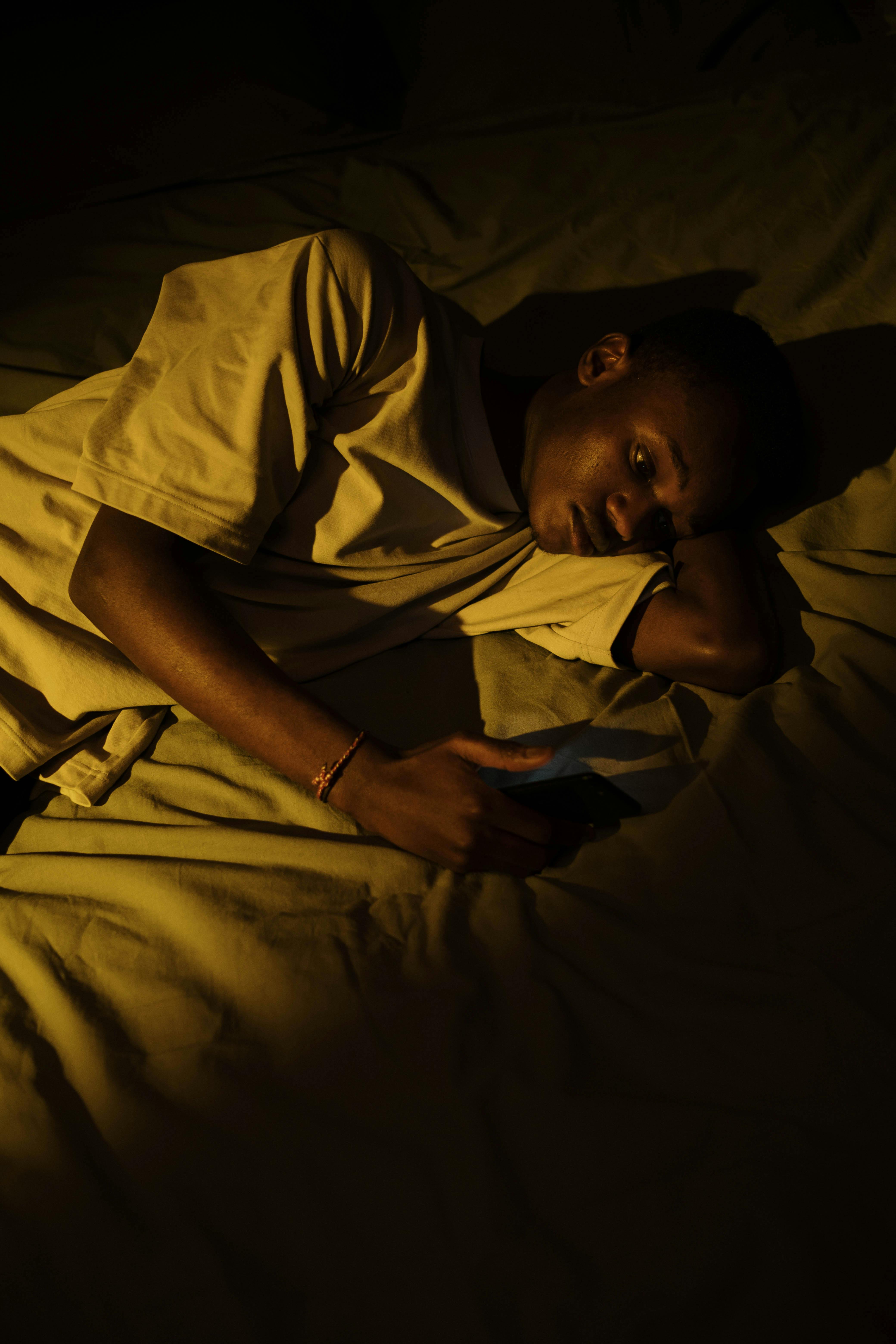 Your anxiety spikes when you stop, because stopping removes the noise. When you are busy, your mind stays in forward motion. Your tasks keep your prefrontal cortex active. This part of the brain helps you regulate. It keeps your emotional responses in check.
At night, this part of the brain quietens. Your body moves toward rest. Your deeper emotional material rises, not because you are failing, but because the body finally has space to breathe.
This is why many people feel their anxiety most strongly just as they get into bed. Your system is not sabotaging you. It is trying to complete what was left unfinished.
In hypnosis, we help your body process during the day, so the system does not need to release everything at night. We explore this at your pace.
Why do anxious thoughts feel bigger at night?
Anxious thoughts feel bigger at night, because your emotional brain is more active than your thinking brain. During the day, your prefrontal cortex shapes perspective. At night, this part of the brain steps back, and the amygdala becomes louder.
The amygdala responds to possibility rather than probability. It imagines danger, because imagining danger historically kept humans alive. In the night, when you are still and the room is quiet, the amygdala has space to make meaning. It exaggerates. It protects.
This is why small concerns can feel enormous after dark. Your thoughts are not lies. They are signals of activation.
Hypnosis helps your system shift into a state where the amygdala no longer leads. You learn how to soothe the emotional brain, rather than push it away.
We explore this gently in sessions at your pace.
Why does my body feel more on edge at bedtime?
 Your body may feel:
- restless
- tense
- jittery
- hot
- tight in the chest
- unable to settle
These sensations often appear when cortisol remains high into the evening. Cortisol should drop throughout the day. When stress accumulates, your body keeps cortisol elevated. Elevated cortisol signals alertness. It makes your body behave as if something important is happening, even when you want rest.
This is not emotional instability. It is physiology.
From a mismatch perspective, your body evolved to complete stress cycles through physical movement, social connection and predictable rhythm. Modern life often interrupts all three. The stress cycle remains unfinished. Your body carries it into the night.
Hypnosis supports the completion of these cycles. When your system learns safety, your body settles more easily at bedtime.
Why does my mind replay the day when I lie down?
Your mind replays the day because your nervous system sees bedtime as the first available moment to process. Humans evolved to reflect each evening through ritual and community. Storytelling, movement, rhythm and physical closeness created a nightly decompression experience. This was the natural place for emotional integration.
Today, the integration often happens alone, in bed and in the dark.
Your system tries to make sense of your day. It scans for unresolved conversations, unfinished tasks, and moments that felt emotionally charged. This is not overthinking. It is your brain’s way of clearing the internal slate.
In hypnosis, we offer your system alternative moments to process, so bedtime no longer carries this entire load. We explore this together in sessions at your pace.
Why does overthinking intensify when I am tired?
 Overthinking intensifies because tiredness removes your cognitive filters. When you feel rested, your thinking brain helps you separate helpful thought from unhelpful noise. When you feel tired, these boundaries soften. Thoughts circle more freely, because the brain has fewer resources to contain them.
Your system may also interpret tiredness as vulnerability. Vulnerability increases alertness. Your thoughts respond by becoming louder.
This is where hypnosis helps. Hypnosis teaches your system that stillness is safe. As safety increases, overthinking decreases.
Why does anxiety make my body resist sleep?
Sleep is an act of trust. Your body will not allow deep sleep if it does not feel safe. Anxiety is a signal that your nervous system expects something to happen. When the system is alert, sleep feels incompatible with survival.
Your ancestors slept in groups. They shared the responsibility of vigilance. Today, your system believes it must do everything alone. If you feel anxious, your body interprets stillness as a risk. It keeps you awake.
This is not a conscious decision. It is the survival brain doing its job.
Hypnosis helps update this system. You learn how to reassure the part of you that stays awake so it can rest.
We explore this gently in-session at your pace.
What deeper question sits under anxiety at bedtime?
Under why does anxiety get worse at bedtime? lives a deeper question:
Why does my system not feel safe enough to rest?
This question sits in the body, not the mind. It relates to:
- past overwhelm
- childhood unpredictability
- too much responsibility
- loneliness
- pressure
- fatigue
- unresolved fear
- lack of co-regulation
- circadian drift
Your body does not need judgement. It needs rhythm and safety.
In hypnosis, you learn how to offer both from the inside out.
How do the four pillars help anxiety at night?
The four pillars of my Human Mismatch Theory regulate your inner world.
Sleep
Predictable wind-down cues prepare your body for rest.
Movement
Movement completes the stress cycle and lowers evening tension.
Nourishment
Stable blood sugar supports emotional stability at bedtime.
Connection
Co-regulation softens the emotional brain and reduces nighttime alertness.
These pillars form the biological foundation for trance. When they stabilise, sleep becomes easier and anxiety lowers.
We explore these pillars together in sessions at your pace.
How can I help my system feel safe at bedtime?
 You can support your system through small, consistent signals:
Slow breathing
Exhalations longer than inhalations guide your nervous system toward rest.
Imagery
Visualisation uses your imagination to soften the emotional brain.
Light reduction
Dim light tells your circadian rhythm that night has begun.
Predictable routines
Your body relaxes when it knows what happens next.
Gentle movement
Stretching or slow walking helps release physical tension.
These tools do not force rest. They help your nervous system recognise the transition to night.
Hypnosis builds this sense of internal reliability. You learn how to guide your system from alertness to rest at your own pace.
How hypnosis helps when anxiety is worse at night
Hypnosis helps because it works directly with the state beneath the thoughts. You do not need to argue with your mind or suppress anything. You learn how to guide your nervous system toward safety. When safety increases, anxiety reduces.
Hypnosis helps you:
- decompress your system
- complete unfinished stress patterns
- soften alertness
- create internal rhythm
- reduce the weight of nighttime thinking
- meet the part of you that fears rest
- build physiological cues for sleep
You choose the pace, frequency and depth. There is no pressure or commitment. You stay in full control of every session.
FAQ
Why does my anxiety get worse at bedtime?
Because your nervous system finally has space to process what it carried during the day. Without distractions, your emotional brain becomes louder.
Why does my heart race at night?
Evening cortisol, unresolved stress and alert patterns can make your heart beat faster. This is not your fault. It is your body doing its best to protect you.
Can hypnosis help nighttime anxiety?
Yes. Hypnosis helps your body shift into safety, so your thoughts soften and your system can rest.
If anxiety rises when the world gets quiet
If your anxiety gets worse at bedtime, your system is asking for support, rhythm and safety. This is not a flaw. It is communication.
You are welcome to bring this into a free one hour consultation. We can explore what your body needs and how to help it feel safe enough to rest at your pace.
 Welcome to my website, a space where I try to catch your eye, and explain the heart of my practice.
My journey over 17 years has taught me that true knowledge isn’t about the letters after my name or the timeline of my academic pursuits. It’s about the stories shared, the moments of vulnerability, and the human connection that transforms both you and me. It’s holding space, listening intently, and noticing the patterns within your words and emotions.
Together, we can navigate the complexities of life, embracing both the shadow and the light. So, if you’re seeking more than just a quick fix, and ready to make lasting changes, you’re in the right place. Let’s embark on this journey together. Click and read more about my approach here.