

Do Screens Affect Sleep? What the New Science Actually Shows
The most recent research shows that screens affect sleep, but the effect of blue light itself is far smaller than we once believed. The bigger issue is sleep displacement. Screens pull us away from the biological rhythms that make hypnotic receptivity and deep rest possible.
 For years, we’ve believed the same story: screens ruin sleep. It makes sense, blue light affects the circadian rhythm and screens emit blue light. The circadian rhythm is your body’s internal 24-hour clock. It runs quietly in the background, telling every system when to wake, when to be alert, when to wind down and when to sleep. It responds mainly to light and darkness: morning light signals the body to wake and release daytime hormones, while evening darkness tells the brain to produce melatonin and prepare for rest. Although modern life often pulls us away from natural patterns, the circadian rhythm still follows the same ancient cycle it always has. Rising and falling in a predictable rhythm designed around the rotation of the earth.
Zeitgebers are the external cues that keep our circadian rhythm on track. The strongest zeitgeber is light. Morning light tells the body it’s time to wake, and evening darkness signals the approach of rest. There are others too, movement, food timing, temperature changes, and social interaction all act as gentle timekeepers, helping the body stay aligned with the 24-hour day. Our internal clock is powerful, but it still relies on these daily signals to stay steady and predictable.
Logically, your brain receives an input of blue light from the sun, logs it as morning, and signals your body to wake up. When the input stops coming after sunset, the brain logs it as nighttime and releases melatonin to signal sleep. The understanding is that when we subject the eyes to artificial blue light via unnatural lighting and screens, the brain perceives it as daylight and doesn’t release melatonin.
However, there is a subtle shift in science that changes this conversation.
What the New Research Says About Screens and Sleep
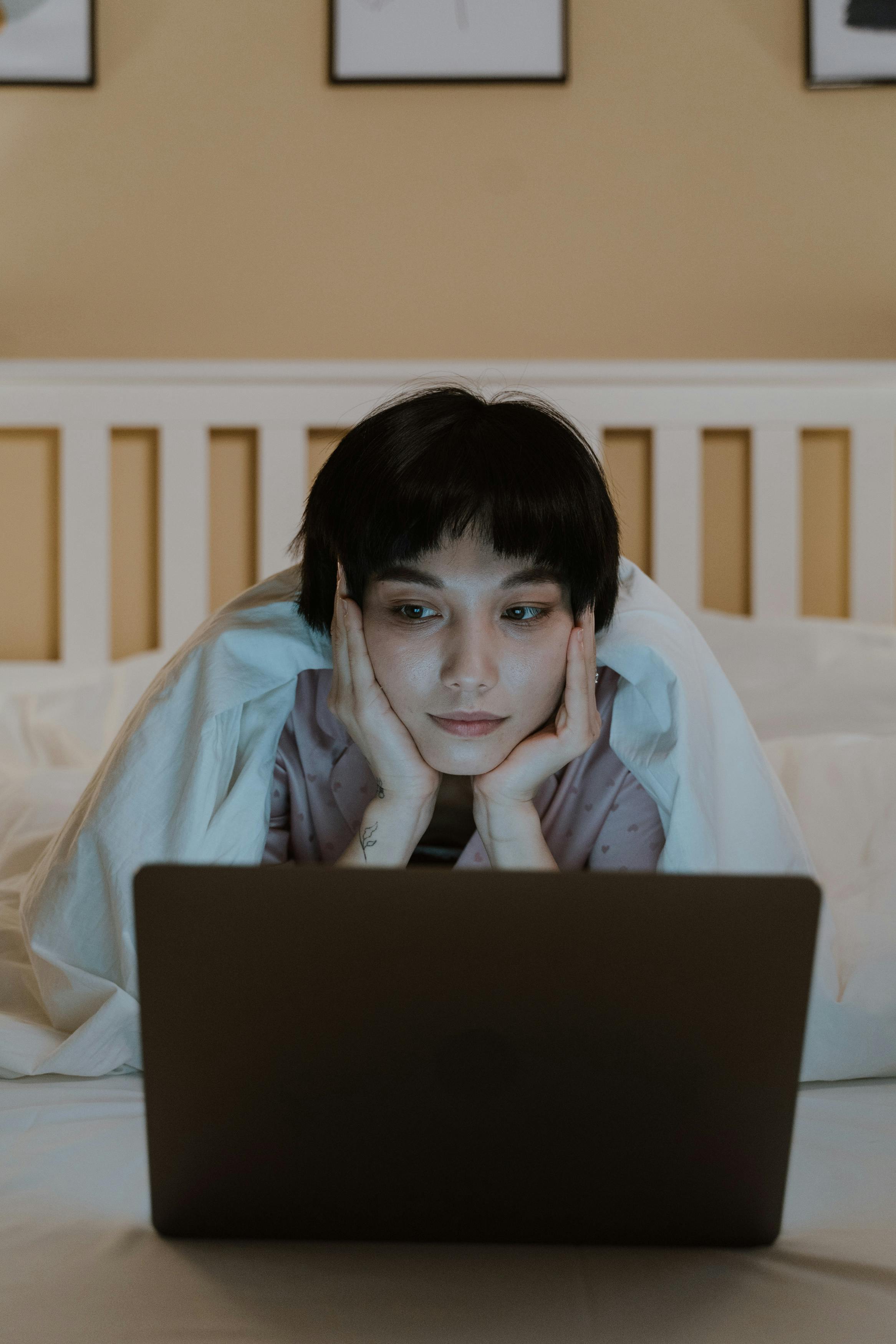 Let’s start with the surprising part.
Research shows bright screens affect sleep, but the effect is tiny. Bright light impedes melatonin, and certain content can increase alertness. However, these small changes don’t match the scale of sleep problems people experience today.
So, what causes the problem? Unfortunately, it is still screens.
Technology sabotages bedtime in tiny increments:
- one more message
- one more video
- one more level
- one more episode
- one more scroll that doesn’t even feel like scrolling
And each tiny increment adds up to create one big problem. Researchers call this sleep displacement. If we’re using a device at midnight, we’re not sleeping at midnight. For some people, this shift is small, but for others, it’s an hour or more. Ever got into bed at 10pm and thought you’ll just check your emails one more time? Before you know it, you’ve clicked on a link which takes you somewhere else. You read about someone and want to know more about them, so start the internet search. Then you end up on their social feed and scroll down five years. By which time you’ve forgotten what you were doing, start scrolling through everything else, and it’s 1am. In addition to the nighttime scroll notifications, alerts, vibrations and flashing screens all break sleep apart from the inside.
Can Screens Help Sleep?
Many people use technology to manage the moments before sleep.
- a distraction from uncomfortable thoughts
- a soft landing after a stressful day
- a sense of connection
- a meditation app
- noise that keeps the mind from spiralling
From a Human Mismatch perspective, it makes sense. Our ancestors didn’t fall asleep alone in silent rooms, overloaded by unprocessed thoughts. They wound down in groups, around fire, with predictable rhythms. Modern bedrooms isolate us, and screens sometimes feel like a tool to bridge that gap.
What Helps Sleep?
The updated picture is gentler than the old one, because it gives you control rather than warning you off:
- Screens before bed are okay for most people when used intentionally. This means choosing to use a device with a clear purpose, rather than drifting into it out of habit, boredom, or automatic behaviour. It’s when you know why you’re picking up your phone or opening an app, and remain aware of how long you want to use it, what you’re using it for, and when you plan to stop. It’s screen time that feels deliberate rather than consuming. You remain in control of the interaction, instead of notifications, algorithms, or endless scrolling pulling you along.
- What you watch matters more than when you switch off. Highly stimulating, anxiety inducing, attention grabbing content will affect your sleep.
- The biggest disruptor is staying up later than planned. Sleep expert Matthew Walker says “Certainly what we know is that the number of individuals who can survive on six hours of sleep or less and show no impairment in either their brain or their body, rounded to a whole number and expressed as a percent of the population, is zero. So quantity matters.” When you consistently impede sleep by scrolling, you are leading yourself towards premature death.
- The second biggest disruptor is alerts. Sleep quality is just as important as sleep quantity, and sometimes, for example in mental health, even more so. Quantity still matters; we need enough hours. But the depth and continuity of your sleep carry an equally significant weight.
- Blue light still matters. The research doesn’t say blue light is irrelevant, many many studies still show blue light has an effect on sleep. The most recent research simply says it doesn’t affect sleep as dramatically as the other studies indicate.
If you feel your sleep is fragile, the most impactful steps are surprisingly simple:
- Decide a shut-eye time, not a bedtime.
- Put your phone on Do Not Disturb or flight mode overnight.
- Choose less engaging content if you’re winding down (TV is far less problematic than phones).
Ideally, turn your phone off an hour before bedtime.
Why this matters for hypnosis and nervous-system work
In hypnosis sessions, I help people reconnect to the part of themselves that already knows how to rest. Primarily, we need to feel safe to fall into deep sleep. Screens don’t usually destroy that safety, but unpredictability and overstimulation can.
When we reduce the nighttime noise – literal and internal – the nervous system finds its way back to its natural rhythm. During my hypnotherapy sessions, rather than overriding your biology, I aim to work with it. Which is why this more nuanced understanding of screens is helpful.
Ultimately, the question isn’t “are screens bad for sleep?” but “how are we using them, and what do they pull us away from?” The new research doesn’t excuse unhelpful habits, nor does it shame the people who rely on screens for comfort. It simply gives us a clearer picture. When we reduce the interruptions, honour our natural rhythms, and use technology with intention rather than drift, sleep becomes less fragile. It becomes a state the body can naturally return to, so long as we give it the chance.
FAQS: Screens, Sleep, and the Nervous System
Does blue light really stop melatonin?
Blue light does influence melatonin, but the effect is far smaller than we believed. The strongest shift comes from very bright evening light, not the normal glow of a phone on low to medium brightness. For most people, it’s the loss of darkness cues that delays the night rhythm. The nervous system reads strong, unpredictable light as “daytime,” and that makes it harder for the body to slip into the softer, receptive state needed for both sleep and hypnosis.
Are screens before bed always bad?
Not necessarily. What matters most is how you’re using the screen. Intentional use and keeping brightness low has a much gentler impact on the circadian rhythm than unconscious scrolling. The biggest disruptor isn’t the screen itself, but sleep displacement: the simple fact that if you’re scrolling at 11:30pm, you’re not sleeping at 11:30pm. When we protect the night rhythm, the nervous system can settle enough for deep sleep and, in hypnosis, deeper internal focus.
Can screens help anxiety at night?
Sometimes, yes. Many people use screens as a buffer between themselves and the rush of unprocessed thoughts that surface at bedtime. From a mismatch perspective, it makes sense our ancestors didn’t fall asleep alone in silent rooms; they settled in groups, with rhythm, firelight, and human sound. Screens can feel like a substitute for that co-regulating presence. The key is using the screen intentionally, so it soothes rather than overstimulates. When the nervous system feels safer, both sleep and hypnotic receptivity improve.
What’s worse for sleep – content or light?
Content. Stimulating, fast, unpredictable content activates the nervous system far more than the light itself. Your brain reacts to emotional spikes, cliff-hangers, notifications, and novelty cues as potential threats that need attention. This sympathetic activation is the opposite of the slow, predictable state required for sleep. Light matters, but alertness matters more. When content sharpens your focus at the exact time your biology expects to soften, both sleep and hypnosis become harder to reach.
How do screens affect hypnosis and nervous-system regulation?
Screens don’t block hypnosis, but it does need on a nervous system that feels safe enough to quieten external noise and turn inward. Late-night scrolling, rapid content shifts, and constant notifications pull the system into vigilance, a mismatch state that keeps the body ready for action, not imagination. When clients reduce evening stimulation and protect their circadian rhythm, they arrive in session far more receptive. The nervous system can downshift, the prefrontal cortex re-engages, and suggestions land in the best way.
 Welcome to my website, a space where I try to catch your eye, and explain the heart of my practice.
My journey over 17 years has taught me that true knowledge isn’t about the letters after my name or the timeline of my academic pursuits. It’s about the stories shared, the moments of vulnerability, and the human connection that transforms both you and me. It’s holding space, listening intently, and noticing the patterns within your words and emotions.
Together, we can navigate the complexities of life, embracing both the shadow and the light. So, if you’re seeking more than just a quick fix, and ready to make lasting changes, you’re in the right place. Let’s embark on this journey together. Click and read more about my approach here.
Resources
Walker, M. (2025, November 17). No. 1 sleep expert: Magnesium isn’t helping you sleep! This sleep habit increases heart disease 57% [Podcast episode]. The Diary Of A CEO with Steven Bartlett. https://singjupost.com/sleep-scientist-dr-matthew-walker-on-doac-podcast-transcript/
Bauducco, S., Pillion, M., Bartel, K., Reynolds, C., Kahn, M., & Gradisar, M. (2024). A bidirectional model of sleep and technology use: A theoretical review of how much, for whom, and which mechanisms. Sleep Medicine Reviews, 76, 101933. https://doi.org/10.1016/j.smrv.2024.101933