

Why Can’t I Sleep Even Though I’m Exhausted?
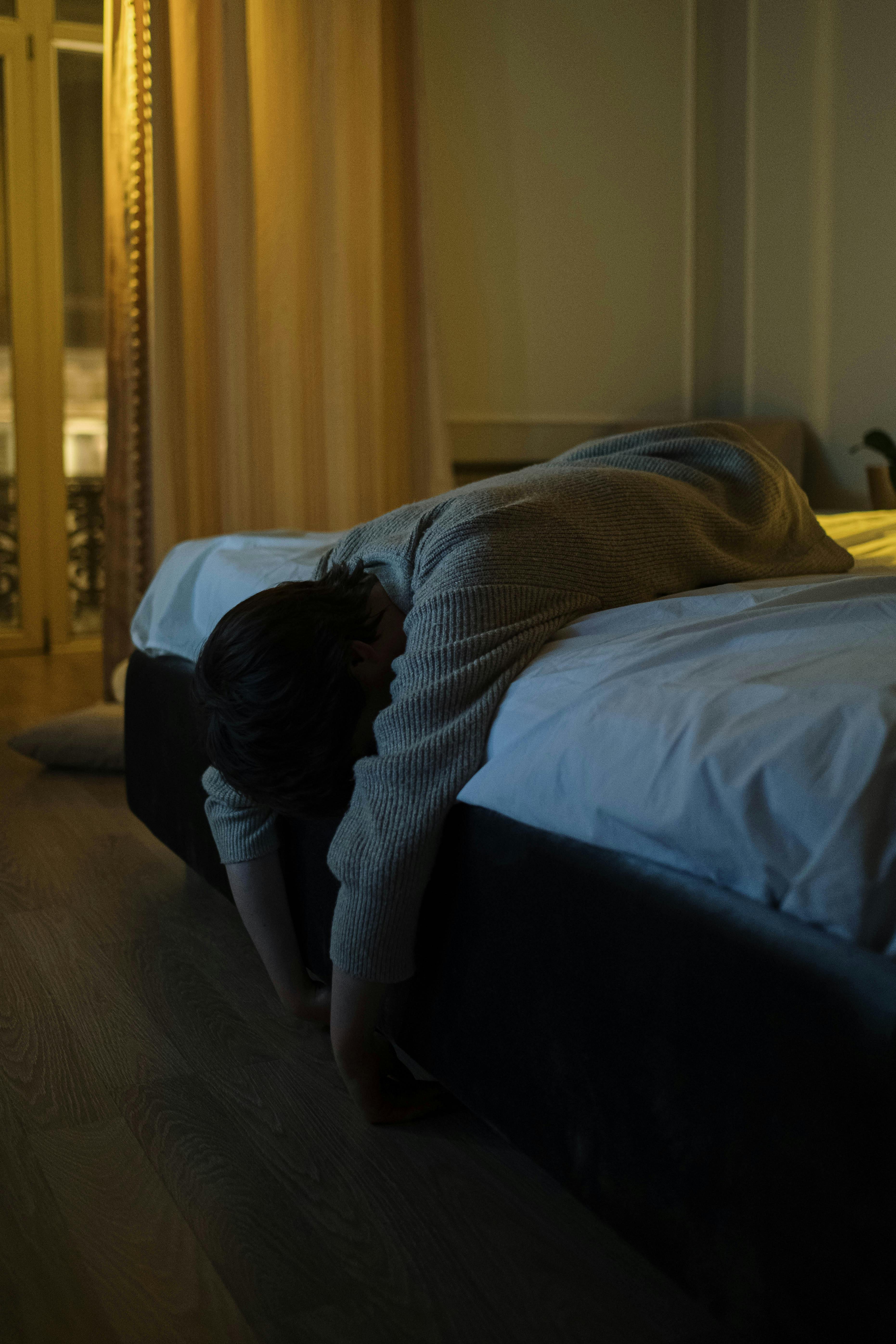 Early humans lived by a rhythm shaped by nature. They ate when food was available, and after effort was made to obtain it. They moved with the daylight, rested with the dark. These rhythms support the metabolic processes and hormonal cycles that regulate energy, mood, motivation, and sleep.
In the modern world, rhythm revolves around a different kind of lifestyle. This is a problem for sleep, because your body evolved to follow patterns directed by nature. Humans evolved to rise with the sun and rest with the dark. Artificial light, late meals, and constant stimulation throw off this natural cycle. Even when the brain wants to sleep, the body doesn’t get the signal.
Sleep as an Evolutionary Act
Sleep is an evolutionary act. Early humans rested when it was dark, they had moved, they had eaten. Their bodies shifted into sleep through the rhythm of the day. Their exposure to the sun, their movement throughout the day, and their need to preserve energy during night hours all signalled to the body that it was time to switch off.
Sleep is an expression of safety, and it’s more than switching from conscious to unconscious. It is also more than rest. Sleep is a step-by-step process that allows your brain to consolidate memories, store new knowledge, forget things it deems unimportant, process emotions and clear out toxins that build up during the day.
The Effect of Modern Life on Sleep
 Modern life rarely feels safe to the nervous system. The sympathetic nervous system – the “go” signal – stays activated under constant stimulation. There’s no clear signal to stop. And the system stays alert. Over time, this becomes chronic. The brain can’t down regulate. The nervous system stays on edge. And sleep becomes harder to achieve.
The average person now eats around the clock, exposing the body to unpredictable blood sugar spikes and insulin surges. These are major contributors to metabolic dysfunction and disrupted sleep. The rise in blood glucose after food is lowest after breakfast and highest after dinner[1]. This difference in metabolism is a feature of circadian rhythm within genes, which changes when we take in and mobilise nutrients and discard metabolic waste.
Even when food was abundant, early humans ate to survive, not to excess. They understood hunger cues. Their systems were flexible. They burned sugar when needed, and switched to burning fat when they had to wait. Today, we move less, we eat more often, and we fill the dark with light and sound. We have hijacked the motivator and gratifier hormones that evolved to guide early humans.
Sleep problems are a mismatch between your evolutionary design and your current environment. Your nervous system evolved to expect rhythm, cycles of effort and rest, food and fasting, light and dark, movement and stillness. When these cycles collapse, the system does not know when to switch off.
You feel exhausted – but exhaustion is not enough. It needs rhythm and safety. It needs the cues it evolved to recognise.
How I can Help
Step 1: Initial Consultation
- This is a free consultation in which I’ll ask questions to get to the root of what you want to achieve and what impedes that.
- We’ll explore your daily rhythms, light exposure, screens, stress, nutrition, and evening habits. I’ll gently assess trauma and chronic stress.
Step 2: Your Therapy Sessions
These sessions are completely personal to you. The structure depends on what comes up in our first conversation. For some people, deep trauma causes sleep difficulties – sometimes historical, sometimes recent – and the work is about rebuilding a sense of safety so the body can finally let go into rest. For others, the issue is ongoing life stress: it might be something chronic, like the strain of a difficult relationship, or short-term, such as preparing for a big presentation. And then there are people who come to me with no obvious stressors, but still lay awake night after night.
Wherever you are, we start from there. My role is to explore what your unconscious brain needs to feel safe enough to switch off. Sleep is a natural process. You don’t have to force it. But you need the right conditions. Together, we uncover what’s getting in the way and create new tools and patterns that support you to rest, in a way that feels natural and sustainable.
What about Hypnotherapy?
 Hypnotherapy is one of the tools I use, but it’s never about me putting you “under” or taking control. It’s about helping you access a deeper state of mind, where you can switch off from external noise and focus inward. Some clients find this helpful, especially if their mind races at night or they’ve learned to stay on high alert.
But it isn’t the only way we work. Sometimes we start with practical strategies. Like resetting your circadian rhythm, calming the nervous system, or reshaping evening routines. Other times, hypnotherapy becomes a natural part of the process once trust and safety are in place. It’s there if you want it, but it’s never forced. The goal is simply to give you the tools for your brain and body to remember how to rest.
What Else?
I’ll help you find a way to prioritise sleep so that it fits with your lifestyle. I’m passionate about the circadian rhythm and supporting you to come back into alignment with it. I also know it isn’t always easy in our modern world, so together we’ll find ways to make it manageable for you.
We’ll look at:
- Resetting your body clock each day
- Maintaining a consistent rhythm
- Understanding light and dark signals
- Recognising the impact of missing sleep cues
- How temperature affects sleep
- The link between blood sugar levels and night wakings
- The obvious influences—like caffeine and alcohol
- Movement and its connection to the circadian rhythm
Your body knows how to sleep. The work is about giving yourself the rhythms, signals, and sense of safety your nervous system needs. With the right conditions in place, sleep stops being a battle and becomes what it was always meant to be: your natural way of restoring balance, energy, and ease.
[1] Panda S. Circadian physiology of metabolism. Science. 2016 Nov 25;354(6315):1008-1015. doi: 10.1126/science.aah4967. PMID: 27885007; PMCID: PMC7261592.
 Welcome to my website, a space where I try to catch your eye, and explain the heart of my practice.
My journey over 16 years has taught me that true knowledge isn’t about the letters after my name or the timeline of my academic pursuits. It’s about the stories shared, the moments of vulnerability, and the human connection that transforms both you and me. It’s holding space, listening intently, and noticing the patterns within your words and emotions.
Together, we can navigate the complexities of life, embracing both the shadow and the light. So, if you’re seeking more than just a quick fix, and ready to make lasting changes, you’re in the right place. Let’s embark on this journey together. To overcome food issues, click and read more about my approach here.