

Why You Crave Food You Don’t Want: Food Cravings and the Lost Art of Satisfaction
 Primitive humans had to wait, search, and work for their next meal. In times of abundance, they knew where to find food and could move there quickly. Getting it was a different matter. Whether through foraging or hunting, it took time and effort. It was strenuous work for a small reward. However, the waiting and effort helped regulate energy balance and metabolism, creating a rhythm of feast and famine that our bodies evolved to handle.
Our motivator hormones governed this natural rhythm. These arise when we are off track, creating agitation to push us into action. Gratifier hormones – the reward system that makes us feel good when we’re moving along the right path for survival – complete the rhythm. When these cycles play out naturally, they provide an internal navigation system. Motivation builds as hunger rises, and satisfaction follows effort. But in modern life, we often skip the hard part. We go straight to the reward.
Effort Before Reward: What We’ve Lost
Today, we have constant and instant access to food. We don’t need to wait, work, or earn the reward. We have delivery apps, processed snacks, and ultra-palatable foods designed to hit our dopamine circuits hard and fast. This floods the system with instant gratification and disrupts the hormonal balance that evolved to support our survival.
These instant rewards mimic the rush we once earned through action. The brain doesn’t know the difference; it just responds to the surge. And because there’s no real effort, there’s no real satisfaction. You feel the high, but not the fullness. So, you reach again and again. It’s a cycle that feels like addiction.
Why Dopamine Drives You to the Fridge
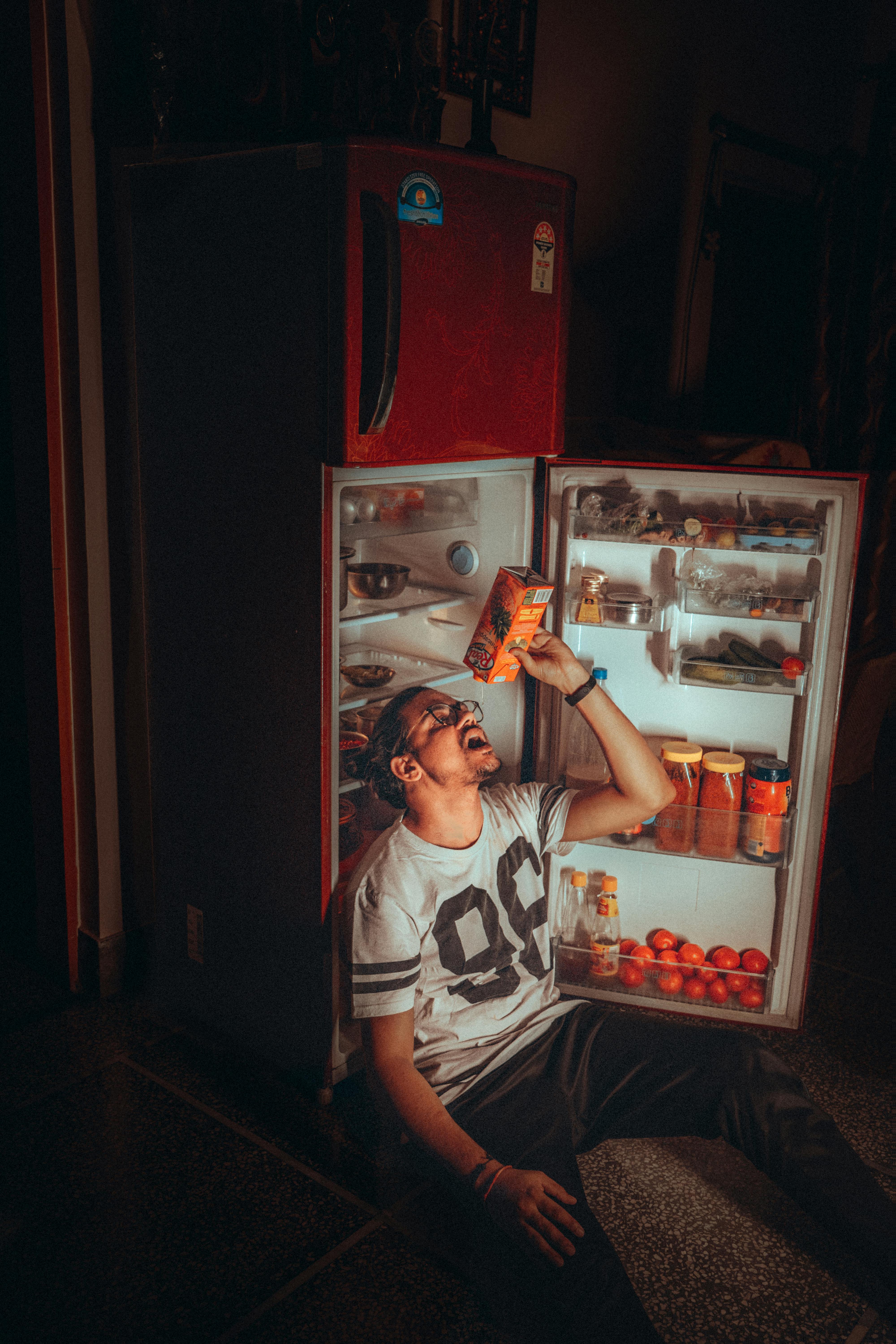 The problem isn’t just the food. It’s the pattern: dopamine without effort. Rewards without anticipation. Gratification without grounding. This hijacks the brain’s reward system, teaching it to seek out more of the same – whether it’s food, substances, screens, or shopping.
The same mismatch plays out in modern consumer culture. The message is clear: more is better, faster is best. And yet, the more we chase instant rewards, the less satisfied we become. This is the core of addiction: the loss of alignment with the natural rhythms of need, effort, and reward.
Our ancestors didn’t binge. Even when food was abundant, they ate to survive – not to excess. They had metabolic flexibility: the ability to shift between burning sugar and fat for energy, and to tolerate hunger without distress. Today, frequent eating patterns – especially those dominated by sugar and processed foods – limit the opportunity to engage the metabolic switch, weakening this flexibility and inforcing dependence.
But it’s not only metabolism. Our nervous system evolved alongside these rhythms. The agitation that motivates action is matched by the calm that follows satisfaction. When we hijack the reward system, this natural balance is lost. Our nervous system stays keyed up, seeking the next hit to quell the unrest. This dysregulation underlies many addictive behaviours, creating a cycle of craving and temporary relief.
Can Therapy Help with Food Addiction?
 The good news? Your body remembers, so your mind can too.
Working with a therapist trained in understanding this mismatch allows space to uncover the why beneath your craving. In therapy, you reconnect with rhythm. You explore how motivation, satisfaction, and effort became untethered in your life. Find your own signals again – hunger, fullness, desire, and satisfaction. You learn to distinguish between needing comfort and needing connection. Between craving sugar and craving meaning.
Hypnotherapy can help regulate your nervous system, working directly with the unconscious patterns that keep you stuck in cycles of seeking. In a hypnotherapy session, we don’t tell you to stop wanting – we guide you to understand what the wanting is for. And from that awareness, you gain control.
Your body is just responding to a world it didn’t evolve for, and you can bring your biology and behaviour back into sync.
Addiction happens when you lose a rhythm – a rhythm therapy can help you find again.
How You Can Begin to Restore Rhythm
 If you recognise yourself in this pattern – reaching for something again and again, only to feel emptier each time – you’re not alone.
Here are some gentle ways to begin shifting the cycle:
1. Pause Before the Pattern
When you feel the urge to reach for your usual ‘go-to’, try creating a small pause. Even five seconds. Ask yourself:
What do I hope this will bring me?
What feeling am I trying to change or create?
Sometimes, just naming the urge can reduce its intensity.
2. Rebuild Real Rewards
Not all rewards are created equal. Try activities that involve effort before reward – like walking, preparing a simple meal, sketching, or tending to plants. These mimic the effort-then-gratification loop your brain evolved to find satisfying.
3. Regulate Through Rhythm
Add rhythm back to your day in small, predictable ways:
-
Go to bed and wake up at roughly the same time.
-
Eat at regular intervals rather than grazing.
-
Spend time in daylight early in the day to support your circadian rhythm.
-
Move your body daily, not as punishment but as connection.
4. Make Space for Feeling
Much of addiction is an attempt to not feel. Instead, try to create safe spaces where feelings can rise. This might mean journaling, voice-noting yourself, or simply sitting with the discomfort and reminding yourself:
“This is just a feeling. It won’t last forever. I can handle this moment.”
5. Seek Connection, Not Perfection
Addiction isolates. Healing reconnects. Whether it’s one safe person, a support group, a therapist, or a pet – connection is key.
 Welcome to my website, a space where I try to catch your eye, and explain the heart of my practice.
My journey over 16 years has taught me that true knowledge isn’t about the letters after my name or the timeline of my academic pursuits. It’s about the stories shared, the moments of vulnerability, and the human connection that transforms both you and me. It’s holding space, listening intently, and noticing the patterns within your words and emotions.
Together, we can navigate the complexities of life, embracing both the shadow and the light. So, if you’re seeking more than just a quick fix, and ready to make lasting changes, you’re in the right place. Let’s embark on this journey together. To overcome food issues, click and read more about my approach here.