

Hypnotherapy for Better Sleep: 7 Common Sleep Disruptors and How to Fix Them
 Do you stare at the ceiling night after night, wondering why sleep keeps slipping through your fingers? Someone said to me recently she feels like there’s an epidemic. Everyone she speaks to has the same problem. It’s no surprise when our lifestyle contains so many sleep disruptors, and we don’t even realise. Modern life is constant stimulation, and the human brain struggles to cope. One of the biggest impacts is on sleep. Yet sleep is also one of our primary needs. Evolution kept it in for a reason, and we cannot survive without it. I suspect though, this is something you know and what brought you to this blog post.
What Disrupts Sleep?
One major disruptor is blue light, which comes from our phones, tablets, and even LED lights. This artificial light tricks the brain into thinking it’s still daytime, delaying melatonin production – the hormone responsible for sleep. Screen time, especially late at night, keeps our minds alert when they should be winding down, leading to restless nights.
In addition to technology, stress and anxiety are major culprits. When our minds race, either from work, personal issues, or unresolved worries, our nervous system stays activated, making it hard to relax. This heightened state of alertness is a safety mechanism from our evolutionary past, but it’s not helpful when we’re trying to sleep.
Poor nutrition can also contribute to sleep disruptions. Nighttime hunger or imbalanced meals can cause blood sugar crashes, waking you up in the middle of the night. You may not register this as hunger, because it can feel like anxiety.
These sleep disruptors, combined with the unnatural demands of modern life, create an environment that isn’t conducive to rest. Shift work, late-night socialising, and constant pressure to stay connected can easily pull us out of alignment with our natural rhythms. In a world designed for constant activity, it’s no wonder we’re struggling to get the deep, restful sleep we need.
The Top 7 Sleep Disruptors and Their Solutions
Blue Light After Dark
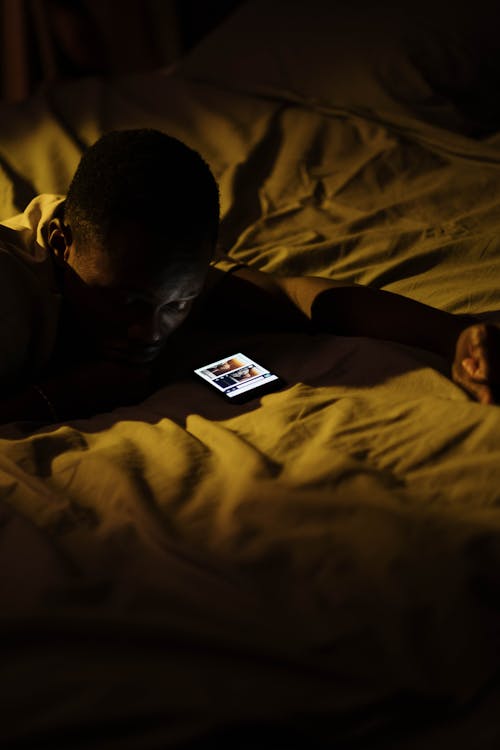 What it does: Blue light from phones, tablets, LED lights and TVs mimics sunlight.
- Why it matters: Your brain responds to this light by staying alert. It thinks it’s still daytime, and delays melatonin production, which is the hormone that signals your body to sleep.
- Even standard room lighting can do this, not just screens. If you’re under bright lights after sunset, your brain might not even realise it’s nighttime yet.
Screen Time and Scroll Traps
- What it does: Engages your brain at a time it should be winding down.
- Why it matters: You might get into bed at 10pm with good intentions, but an email pops up, then a notification. Before you know it, you’re deep in social media or YouTube and the clock strikes midnight. Even if you fall asleep quickly, that lost hour (or more) cuts into the deeper stages of sleep.
- This feels normal – but it’s not harmless. These disturbances can reduce the quantity and quality of sleep, even if you’re not aware of it.
Nutrition and Night-Time Hanger
- What it does: A poor or unbalanced diet can lead to blood sugar crashes at night.
- Why it matters: Your body wakes you up because it’s running low on energy. You might not recognise it as hunger – instead, you’ll feel restless or anxious, or lie awake ruminating over things.
- Skipping meals or not eating enough during the day can be the quiet trigger behind middle-of-the-night wake-ups.
Stress and the Brain’s Safety Mechanism
- What it does: Keeps your nervous system in alert.
- Why it matters: The primitive part of your brain still sees stress as a threat to survival. Whether the stress is a looming deadline or an argument earlier in the day, your brain may decide it’s not safe to sleep.
- This mechanism is protective, but unhelpful when you just want to rest. If your nervous system stays activated, sleep won’t come easily.
Overthinking or Fixating on Sleep
- What it does: Turns sleep into a goal instead of a natural state.
- Why it matters: When you try too hard to sleep, you often make it worse. The pressure to “do everything right” can keep you tense. Routines meant to help can backfire if they become rituals loaded with expectations.
- This creates a spiral – frustration about not sleeping causes more stress, which delays sleep even further.
Ignoring Your Tired Cues
- What it does: Delays bedtime past your natural window.
- Why it matters: When you override tiredness with TV, phones, or late-night activities, your body interprets this as a need to stay awake and releases cortisol to help you do so. Cortisol is the last thing you want when trying to sleep, because it’s the wake-up hormone.
- Listening to your body is key – many of us have become poor at interoception (noticing internal signals), but that’s something you can rebuild.
PTSD, Anxiety, and Emotional Disturbance
- What it does: Keeps the brain in a loop of heightened alertness.
- Why it matters: Trauma, ongoing anxiety, or even unresolved worry from the day can create mental noise that makes it hard to fall or stay asleep. Your brain may replay scenarios, trying to resolve them.
- Therapy can help you address this. Relaxation techniques and hypnotherapy are useful tools to process the trauma and alleviate the symptoms.
Modern Life: The Unnatural Norm
- What it does: Pulls you out of alignment with the natural world.
- Why it matters: Late-night socialising, shift work, constant stimulation, and high expectations all chip away at your natural rhythms. Our world feels “normal,” but it’s incredibly unnatural for the human body.
- You’re not broken. You’re just trying to function naturally in an environment that isn’t designed for rest.
Hypnotherapy for Better Sleep
 The causes of poor sleep are often subtle but powerful, and modern life, with its constant stimulation, makes it even harder to find rest. Whether it’s blue light, stress, or overthinking, these sleep disruptors affect the quantity and quality of sleep you get. The good news is, with awareness and effort, it’s possible to break free from these patterns.
If you’ve tried everything and still find yourself tossing and turning, it might be time to explore a more targeted solution. Hypnotherapy for better sleep will help you address the root causes of sleep disturbances. By working with your mind’s natural relaxation response, hypnotherapy can help reduce stress, ease anxiety, and retrain your brain to embrace restful sleep.
Sleep is not a luxury – it’s a biological necessity. Don’t let the demands of modern life steal your peace and rest. If you’re ready to take back control of your sleep and feel more energised, book a session today to discover how hypnotherapy can help you overcome the common sleep disruptors and enjoy deeper, more restorative sleep.
 Welcome to my website, a space where I try to catch your eye, and explain the heart of my practice.
My journey over 16 years has taught me that true knowledge isn’t about the letters after my name or the timeline of my academic pursuits. It’s about the stories shared, the moments of vulnerability, and the human connection that transforms both you and me. It’s holding space, listening intently, and noticing the patterns within your words and emotions.
Together, we can navigate the complexities of life, embracing both the shadow and the light. So, if you’re seeking more than just a quick fix, and ready to make lasting changes, you’re in the right place. Let’s embark on this journey together. To overcome anxiety click and read more about my approach here.