

Hypnotherapy for Stress
 The other day, a client used the word stress in conversation. They quickly followed up with – I don’t like to use that word. It’s a made-up word, isn’t it?
I thought – aren’t all words made up!
And made it my mission to investigate what they meant. I asked the question, and they said how the word originated from engineering, the internal force within something when there is an application of external force.
Fair point, but this is how language works.
I thought AI might know the answer – it went straight to psychological stress. It told me, stress is a word we use to describe the physiological and emotional response to challenges, but it is a construct. An umbrella term that simplifies a complex process within the body. Because it isn’t tangible and is an individual reaction to perceived pressures, AI wonders if it is based on interpretation rather than essential. Therefore, we have the power to change or control our response to change the level of stress.
Finally, I went to my favourite book on the subject – Why Zebras don’t get Ulcers by Robert Sapolsky. He puts it quite simply.
“A stressor is something in the outside world that knocks you out of homeostatic balance, and the stress response is what your body does to reestablish homeostasis.”
So, I wonder if my client is right. Perhaps we can put stress into a box with some other overused words that don’t really make much sense when used as a noun – fat, naughty, good, normal etc. Which means when you seek hypnotherapy for stress, your therapist may want to dig deep and explore the stressor.
Hypnotherapy for Stress Relief – Exploring the Stressor
Let’s imagine you recognise your body is out of equilibrium. You’re experiencing physical symptoms,
 Headaches
- Muscle tension or pain
- Tiredness
- Sleep issues
- Changes in appetite
- Digestive issues
- Racing heart or palpitations
- Weakened immune system
Emotionally, you’re irritable and angry, constantly worrying or feeling overwhelmed. Your mind feels foggy, and you forget a lot. You swing from one mood to another with moments of hopelessness, inadequacy or low self-esteem. As symptoms of anxiety, you may feel some of these things, all of them or others.
Anxiety and stress are not interchangeable terms – anxiety is the term for the effect of an unnecessary activation of the stress response (caused by something we cannot do anything about or for no reason at all). In some situations, it is good to have awareness of the stressor. For example, if your body reacts to an upcoming presentation, the underlying cause may be fear of public speaking. The treatment for this is different to someone whose body is in the same metabolic state as an athlete, during the peak of a competitive event while playing chess.
Using Hypnotherapy to Manage Stress
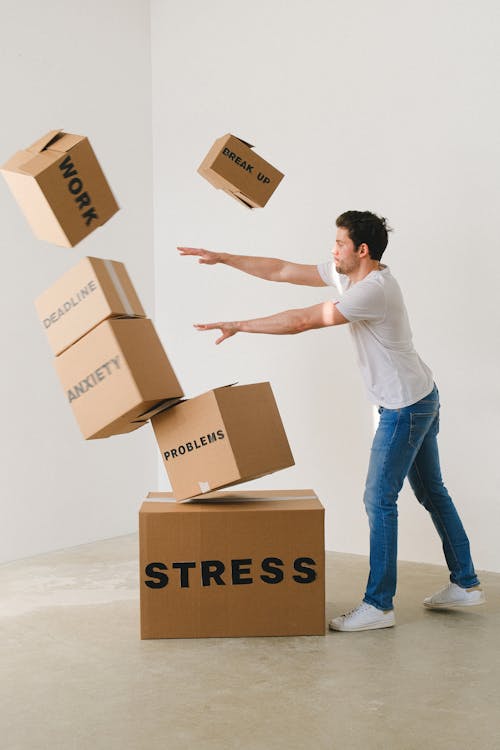 When Dr. David Spiegel speaks about using hypnosis to manage the stress response, he explains how he can detach his physical reaction from his mental reaction to deal with the stressor in a calmer way. When stress becomes chronic, or the stressor is unknown, the internal state of anxiety feels like confirmation that something is wrong. By managing the physiological reaction to stress with hypnosis and recognising it for what it is, it is easier to see it from a different perspective and take control. There are significant changes in brain activity during hypnosis, which you can learn more about here. Due to this change in brain state, you can use hypnosis in powerful ways as a therapeutic tool.
- Relaxation and Focus
In hypnosis, the sympathetic nervous system (responsible for fight or flight) slows down, and the parasympathetic nervous system (responsible for rest-and-digest) activates. This takes the body out of the fight or flight (stressed) state and returns it to the state of allostasis. Some people feel a wave of relaxation wash over them.
- Identifying and Reframing Triggers
Hypnosis helps you switch off from the noise of the outside world and focus internally. Self-awareness increases, and you can explore mental triggers and physical reactions with greater clarity. You can reframe previous experiences, visualise future ones in a different way, and grasp a level of control that makes future reactions easier to catch.
- Anchoring Calm Responses
You can use hypnosis to anchor feelings. This means you connect a specific feeling or behaviour to a thing or reaction. For example: “When you notice your heart racing, you will take three slow breaths and feel a wave of calm wash over you.” This helps you manage the physical and emotional effects of stress daily.
 Visualisation
Guided visualisation is a key tool in hypnosis. Your brain does not differentiate between real and imagined experiences. You can utilise this power by rehearsing for future experiences or reframing previous moments. You can also create a safe place in your mind to return to whenever you need to feel at peace.
Understanding and Managing the Stress Response
Stress may be a made-up word, but the experience it describes is very real. Hypnotherapy is a powerful way to take control of your stress response by addressing the physical and mental aspects of stress. Through techniques like relaxation, reframing triggers, and anchoring calm responses, you can move towards balance and clarity. By exploring the root causes and reshaping your reactions, you regain control of stress and therefore well-being.