

Stress and Modern Life: What Happens in the Body and Why?
Originally published on 1-4-19 | Updated 27-10-26

I originally wrote this blog post seven and a half years ago, after passing this tree on the walk to my daughters’ school. Only a year later, due to some – out of our control – dramatic shifts in the school, they left and we haven’t ever returned. Until yesterday. We were driving by on our way elsewhere, and I suggested we go and have a look. They were naturally amazed at the size of the school compared to how they remembered it. The field they thought was humongous was actually quite small. And the classrooms tinier than they imagined. How strange that this should then be the next in a long line of blog posts I’m updating.
I walked past this tree daily for five years, and I noticed how entwined the branches were – like a tangled necklace. It made me think of the work I do with clients; how so often it is a case of untangling the branches to find the trunk underneath. Many people struggled to work out what is wrong, they just know they don’t feel right.
Often, there are several layers to peel back before we begin to understand what is really going on. As we explore an issue, we sometimes discover that what initially brought someone to therapy is actually a symptom of something deeper. Stress is a good example of this. It can affect the body in so many different ways. People often fail to recognise the connection between their physical symptoms and the stress they are experiencing.
“But I’m Not Stressed”
I frequently hear people say, “But I’m not stressed,” and they genuinely don’t feel they are. However, our bodies respond to stressors that we may have become so accustomed to living with that we barely notice them anymore. We can experience the physical effects of stress without consciously recognising that our body is under strain.
When I first set up practice as a hypnotherapist, most of my clients wanted to lose weight, quit smoking or change a habit. Over time, I began to notice a shift. Increasingly, people were coming to see me for help with stress and anxiety.
I originally wrote this article in April 2019 (for Stress Awareness Month), when that change was already noticeable. At the time, I wondered whether it reflected something happening in wider society. Seven years later, my understanding of stress has developed considerably. I’ve become increasingly interested in the relationship between our biology and the world we’ve created for ourselves.
Much of my work now explores human behaviour through the lens of evolution. Our bodies and brains developed over hundreds of thousands of years in environments that looked very different from the ones we inhabit today. The way we find food, move through our day, sleep and interact with other people has changed enormously. And many of the biological systems that regulate our responses to the world remain much the same.
Stress Today
This has led me to question how much of the stress we experience today might be connected to the conditions of modern life. We tend to think about stress in relation to the pressures we’re consciously aware of, such as work, finances or difficult relationships. Yet our bodies are continually responding to our circumstances, including aspects of daily life that we may barely give a second thought.
Stress Awareness Month has taken place since 1992, and more than thirty years later, I think it’s worth looking a little more closely at what we’re asking our bodies to cope with.
Book your initial consultation
Life Pressures

Work pressures seem to be increasing, technology has made us constantly accessible, and there are growing expectations about what we should be able to achieve as individuals. I’ve heard people describe the expectation to parent as though we don’t have a job, while working as though we don’t have children, and I think that sums up the situation rather well.
We have convenience food available, yet we feel pressure to cook everything from scratch, make nutritionally perfect meals and consider the environmental impact of every ingredient. We can order almost anything online and have it delivered the following morning, yet we might spend three hours comparing products, reading reviews and searching for the best deal. All the while, we’re aware that we should probably be supporting independent, local businesses. We’re also supposed to exercise regularly, get enough sleep and somehow find time for the people we love.
From an Evolutionary Perspective
I find it fascinating to consider all of this from an evolutionary perspective. We are human animals living in an environment that has changed extraordinarily quickly. Our stress response evolved to help us respond to challenges and demands, mobilising energy through changes in our nervous system and the release of hormones such as adrenaline and cortisol. These same biological processes can activate when we’re dealing with a work deadline, worrying about something we’ve read online or trying to work out how to collect the children from school when we’re supposed to be in a meeting.
Our bodies can respond to anticipated problems and perceived threats as well as immediate physical danger. Our heart rate might increase, our muscles tense and our attention narrow as the brain prepares us to respond. These reactions can be useful, although the demands of modern life can mean that we experience them frequently throughout an ordinary day.
I’m particularly interested in what happens when these demands accumulate, especially when the way we live also makes it harder to meet some of the basic biological needs that help us recover from stress. We may spend much of the day sitting down, have little meaningful contact with other people and struggle to get sufficient sleep. Over time, these circumstances can influence how we feel and how readily we respond to the next challenge.
What Happens in the Body when we Experience Stress?
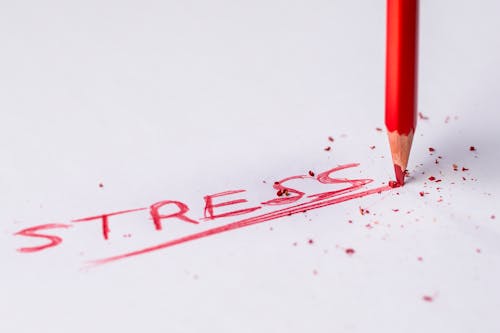
Stress is a biological response that helps us deal with situations our brain interprets as threatening or demanding. This response has evolved over millions of years and involves several interconnected systems that prepare us to respond to whatever is happening around us.
When the brain detects a potential threat, it can activate the sympathetic nervous system, triggering the release of adrenaline (also known as epinephrine). Within seconds, our heart may begin beating faster, our breathing changes and blood flow shifts to support the muscles. We become more alert and ready to respond.
Alongside this rapid response, the brain can activate the hypothalamic-pituitary-adrenal (HPA) axis, a hormonal system that leads to the release of cortisol from the adrenal glands. Cortisol helps make energy available to the body and influences how we respond to an ongoing challenge.
Cortisol has receptors throughout the body and plays an important role in everyday functioning. It helps regulate metabolism, blood sugar, inflammation and blood pressure, and it also influences memory. We need cortisol for normal health, and its levels naturally fluctuate throughout the day, generally rising towards the morning and falling as we approach bedtime.
When we experience stress, these systems work together to help us respond. Digestion may slow or change, muscles can become tense and our attention may become more focused on whatever is concerning us. If stress continues over a prolonged period, changes in these systems can begin to affect sleep, digestion and other aspects of our physical health.
From an Evolutionary Perspective
From an evolutionary perspective, these responses make a great deal of sense. Our ancestors needed to respond quickly to physical dangers, and the ability to mobilise energy and react to a threat would have helped them survive. These same systems also supported them through the ordinary challenges of finding food, navigating relationships and coping with uncertainty.
Today, our brains continue to assess our surroundings and anticipate potential problems. A difficult conversation, an approaching deadline or even the thought of something that might happen in the future can activate elements of the stress response. The brain draws on previous experiences, memories and expectations when assessing what might be threatening, which means we can experience genuine physical symptoms in response to something we’re simply thinking about.
This is one of the reasons I find the relationship between our evolutionary history and modern life so interesting. The circumstances that activate our stress response have changed considerably, and many of the challenges we face today are ongoing or difficult to resolve through immediate physical action. Understanding how these biological systems work can help us make sense of why we sometimes experience stress without being consciously aware of what has triggered it.
Book your initial consultation
Can imagining a situation trigger a physical response?

In 1995, neuroscientist Alvaro Pascual-Leone and his colleagues carried out a fascinating study into how physical and imagined experiences influence the brain.
Participants learned a simple five-finger exercise on the piano. One group physically practised the exercise for two hours a day over five days, while another group spent the same amount of time imagining themselves playing it, without moving their fingers. A third group did neither.
The researchers used transcranial magnetic stimulation (TMS) to measure changes in the areas of the brain involved in controlling the fingers. Remarkably, both the physical and mental practice groups showed similar changes in these motor areas, although those who physically practised developed greater playing ability.
The study demonstrated that imagining an action can produce measurable changes in the brain, even when we don’t physically perform it.
Our Thoughts and Expectations Influence our Physical Experiences
I find this particularly interesting when considering how our thoughts and expectations influence our physical experiences. Research into stress has also shown that anticipating a difficult situation can activate physiological stress responses. We might notice our heart beating faster while thinking about an upcoming presentation, for example, even though we’re sitting comfortably at home.
Of course, there are situations where the stress response is enormously useful. If we need to perform an emergency stop while driving, the rapid changes in our nervous system help us react. Stress can also support performance in sport, and a degree of arousal can help us concentrate when preparing for an exam or an important presentation.
However, we can also experience these physiological changes when we’re worrying about something that hasn’t happened, imagining how a conversation might go or repeatedly thinking about a problem we can’t immediately resolve.
This becomes particularly relevant when we consider how much of modern life involves anticipating future demands. We can spend considerable amounts of time thinking about what needs doing tomorrow, what might go wrong next week or how somebody might respond to something we’ve said.
Each of these experiences has the potential to influence how we feel physically, even while we’re going about an otherwise ordinary day.
What happens when we experience stress for a long time?

Our stress response evolved to help us meet challenges and respond to potential danger. In situations that require immediate action, the sympathetic nervous system can rapidly mobilise energy, increasing our heart rate and alertness so that we’re ready to respond.
These changes are generally temporary, and the body has processes that help us recover once the immediate demand has passed. However, many of the pressures we experience in modern life continue over days, weeks or even months. We may find ourselves repeatedly anticipating problems, worrying about things beyond our control or moving from one demand straight into another.
Over time, prolonged or repeated activation of our stress systems can affect the way our bodies function. Researchers sometimes describe the cumulative physiological effects of adapting to ongoing demands as allostatic load.
The effects of chronic stress can show up in many different ways, and we may not immediately recognise that stress could be contributing to how we feel.
Physical symptoms of stress can include:
- Muscle tension, headaches and other aches or pains
- Digestive difficulties, including changes in bowel habits
- Changes in appetite
- Difficulty sleeping or feeling tired despite getting enough sleep
- A racing heart or palpitations
- Changes in sexual desire
- Increased susceptibility to some illnesses
Cognitive and emotional symptoms of stress can include:
- Difficulty concentrating or remembering things
- Persistent worrying or racing thoughts
- Feeling anxious, irritable or overwhelmed
- Finding decisions more difficult
- Feeling low or losing interest in things we usually enjoy
Stress can also influence our behaviour. We might withdraw from other people, put off tasks that feel difficult or find ourselves relying more heavily on alcohol, food or other habits to manage how we’re feeling.
Of course, these experiences can have many different causes, and we should never automatically assume that stress is responsible for a physical or psychological symptom.
What interests me is how easily these changes can become part of everyday life. We may become accustomed to poor sleep, persistent tension or feeling slightly on edge, particularly when the circumstances contributing to them have been present for a long time.
This is one of the reasons I think it’s important to look at the wider conditions in which we’re living. Our bodies are continually responding to the demands placed upon them, and our opportunities for rest and recovery influence how well we cope with those demands.
Book your initial consultation
What can we do about chronic stress?
 I think one of the most useful places to begin is by recognising how much our everyday circumstances influence the way we feel. We can become so accustomed to certain pressures that we barely notice them anymore, particularly when they have been part of our lives for years.
- Understanding how the stress response works can help us recognise some of the physical changes we experience and begin to explore what might be contributing to them.
- I also think it’s worth considering how well our daily lives meet our basic biological needs. Throughout most of our evolutionary history, humans lived in close connection with other people, moved regularly as part of everyday life and spent much of their time outdoors. Our bodies still depend on sufficient sleep, appropriate nourishment and opportunities for recovery, and these can be surprisingly difficult to prioritise in modern life.
- Of course, we can’t simply remove every source of stress. Some situations require practical changes, while others involve circumstances we have very little control over. Having people we can rely on, making time for meaningful activities and recognising when we’re asking too much of ourselves can all influence how we cope.
- Therapy can also be helpful. In my practice, I work with people to explore the circumstances contributing to their stress, understand their responses and develop ways of managing difficulties. Depending on the individual, this might involve examining established patterns of thinking and behaviour, working with past experiences or using hypnosis and relaxation techniques.
- I originally wrote this article for Stress Awareness Month in April 2019. Seven years later, I find myself thinking about stress in a much broader way, particularly as I continue researching the relationship between our evolutionary history and modern life.
- If you’re experiencing ongoing stress or anxiety and would like to explore how therapy might help, I offer an initial consultation where we can discuss what’s happening for you and consider how we might work together. You’ll also have the opportunity to ask any questions before deciding whether you’d like to continue.
Book your initial consultation
 Welcome to my website, a space where I try to catch your eye, and explain the heart of my practice.
My journey over 17 years has taught me that true knowledge isn’t about the letters after my name or the timeline of my academic pursuits. It’s about the stories shared, the moments of vulnerability, and the human connection that transforms both you and me. It’s holding space, listening intently, and noticing the patterns within your words and emotions.
Together, we can navigate the complexities of life, embracing both the shadow and the light. So, if you’re seeking more than just a quick fix, and ready to make lasting changes, you’re in the right place. Let’s embark on this journey together. Click and read more about my approach here.
Resources
HelpGuide.org. (2019). Stress Symptoms, Signs, and Causes. [online] Available at: https://www.helpguide.org/articles/stress/stress-symptoms-signs-and-causes.htm/ [Accessed 21 Mar. 2019].
Pascual-Leone A, e. (2019). Modulation of muscle responses evoked by transcranial magnetic stimulation during the acquisition of new fine motor skills. – PubMed – NCBI. [online] Ncbi.nlm.nih.gov. Available at: https://www.ncbi.nlm.nih.gov/pubmed/7500130 [Accessed 21 Mar. 2019].
Hormone.org. (2019). Cortisol | Hormone Health Network. Available at: https://www.hormone.org/hormones-and-health/hormones/cortisol [Accessed 21 Mar. 2019].
Publishing, H. (2019). Understanding the stress response – Harvard Health. [online] Harvard Health. Available at: https://www.health.harvard.edu/staying-healthy/understanding-the-stress-response [Accessed 21 Mar. 2019].
McEwen, Bruce S. “Central Effects of Stress Hormones in Health and Disease: Understanding the Protective and Damaging Effects of Stress and Stress Mediators.” European Journal of Pharmacology, U.S. National Library of Medicine, 7 Apr. 2008, www.ncbi.nlm.nih.gov/pmc/articles/PMC2474765/.
Team, H. and Team, H. (2019). How is Anxiety Different from Stress? – Stress and anxiety. [online] Healthstatus.com. Available at: https://www.healthstatus.com/health_blog/depression-stress-anxiety/how-is-anxiety-different-from-stress/ [Accessed 28 Mar. 2019].